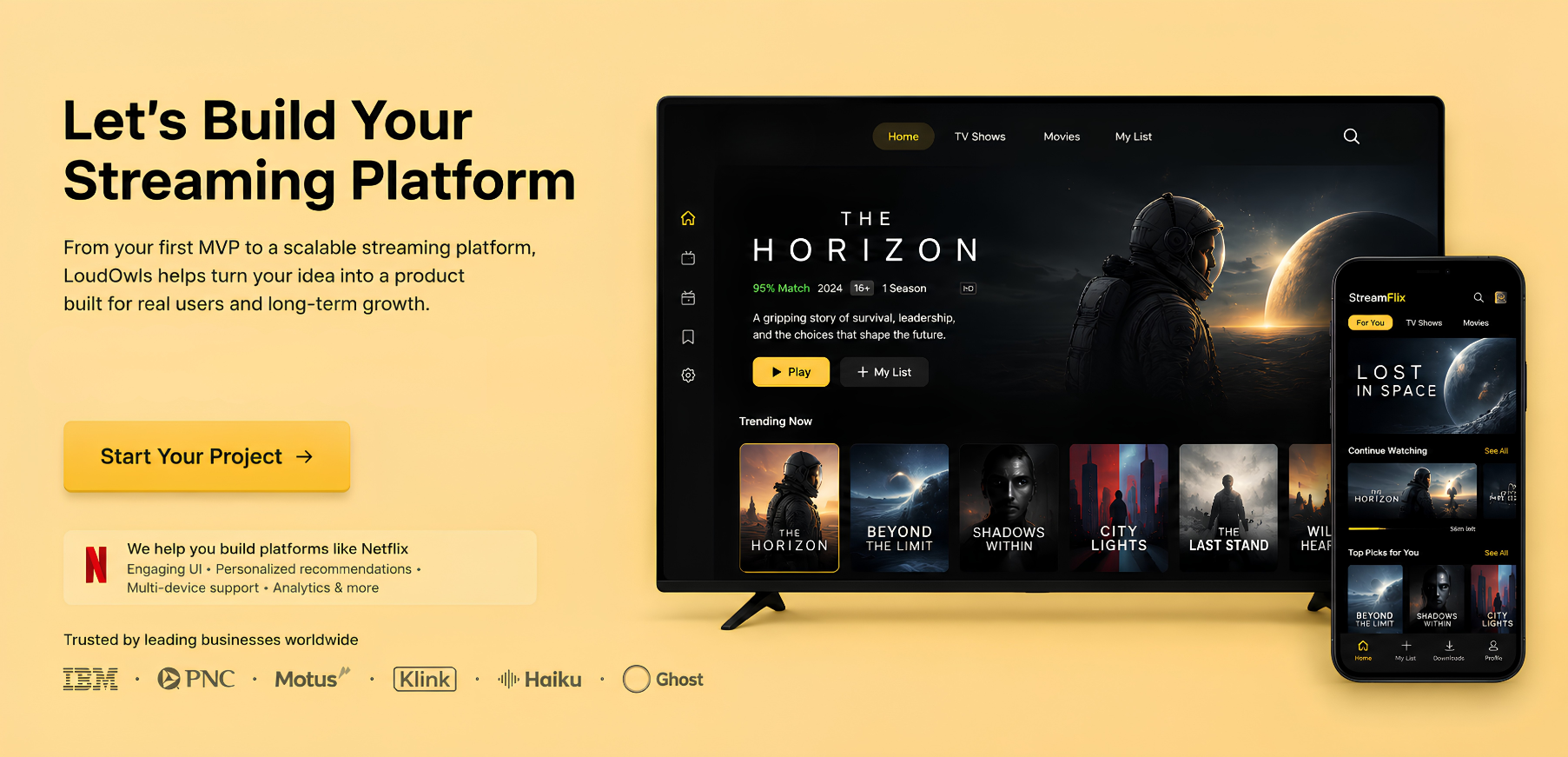
Netflix generated around $45 billion in 2025 and has more than 325 million subscribers. But a successful streaming platform doesn’t need to compete with Netflix on size.
A video streaming app like Netflix can focus on a specific audience — from fitness and education to regional entertainment and niche content.
So, what does it take? What features are needed, which technology should be used, and how much does it cost?
This guide covers the key points of streaming app development, from features and tech stack to costs and the trends shaping streaming in 2026.
Who Should Build an App Like Netflix?
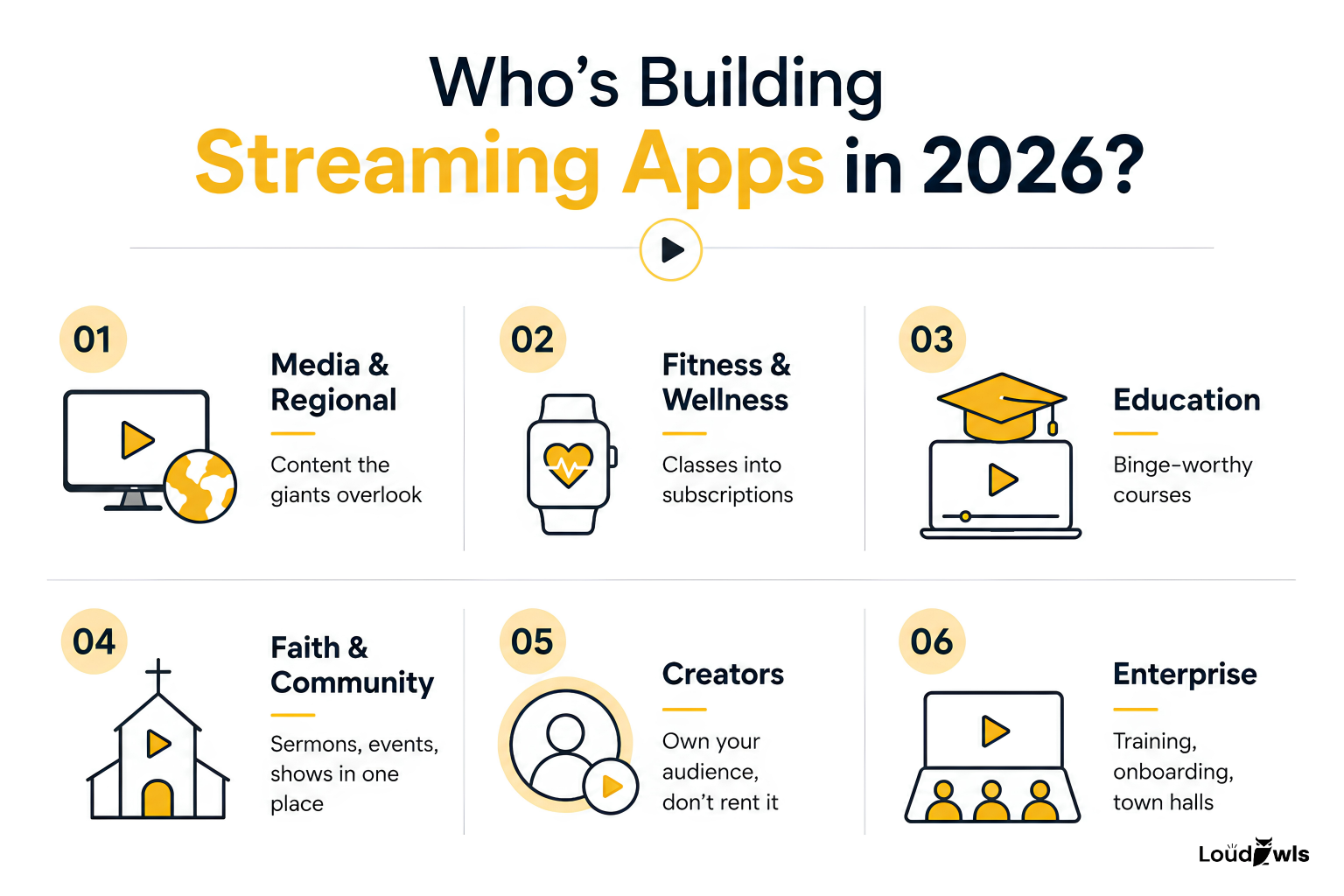
Streaming is no longer limited to entertainment giants. A video streaming app like Netflix can help businesses reach a specific audience with content built around their interests.
Building an app like Netflix makes sense for media companies, fitness brands, education platforms, creators, and regional content providers.
How Streaming Works (Behind the Play Button)
When someone presses play on Netflix, the full video isn’t downloaded. Videos are stored in multiple qualities and split into small chunks that load as you watch.
With adaptive bitrate streaming, the app automatically adjusts quality based on your internet speed, keeping playback smooth rather than freezing.
Behind the scenes, transcoding, packaging, CDN delivery, and DRM protection make this possible. That’s why OTT app development is about much more than just playing videos.
How to Build an App Like Netflix
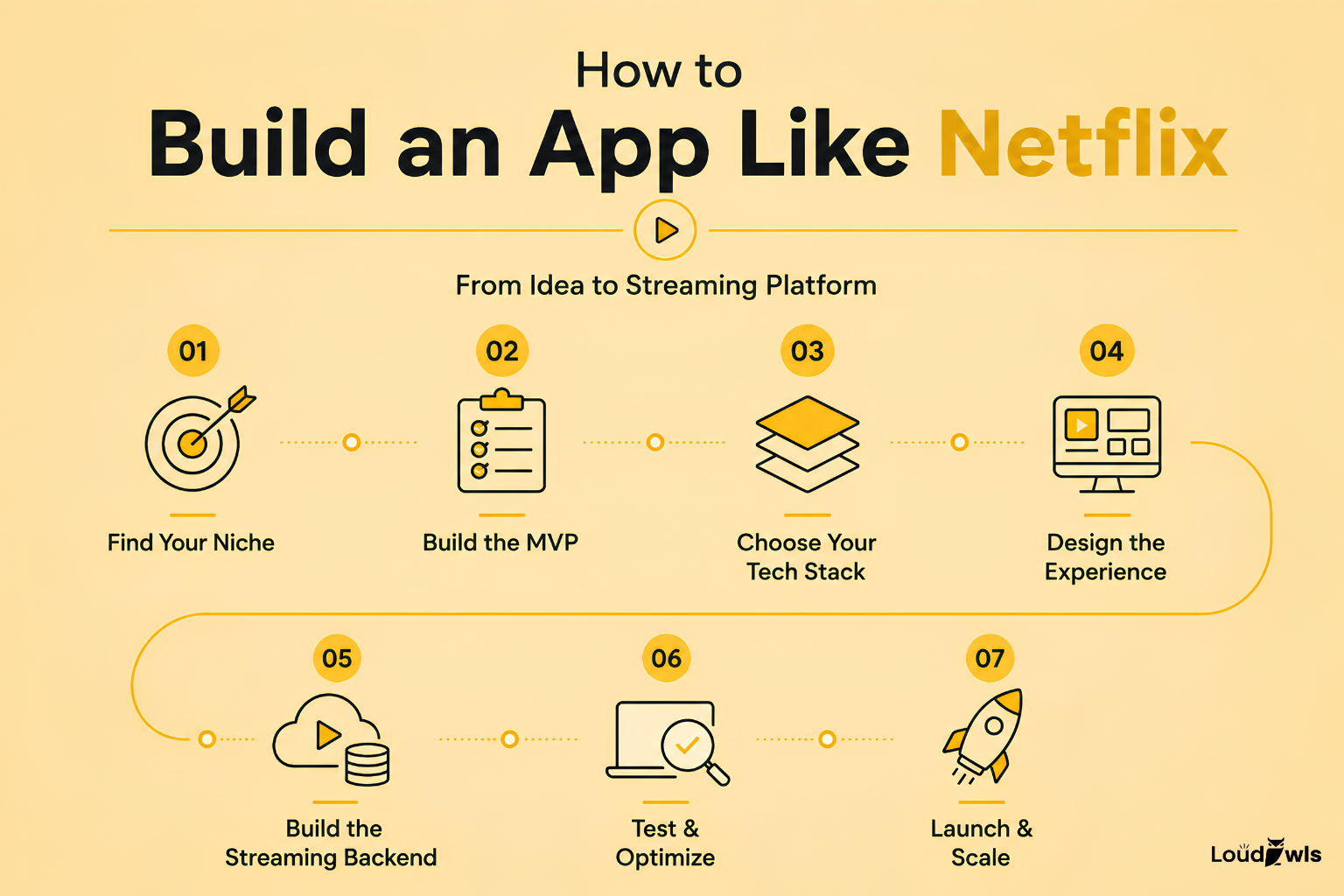
Building a streaming app can feel complex, but the process is straightforward when broken into clear steps.
Pick Your Niche and Content: Know who your audience is and what they want to watch. A focused content library can be more valuable than trying to compete with Netflix on everything.
Start With an MVP: Begin with essentials like sign-up, browsing, search, video playback, and payments. Add advanced features after you understand what users actually need.
Choose the Right Tech Stack: React Native or Flutter can support cross-platform apps, while cloud infrastructure handles the streaming backend and scalability.
Keep the Interface Simple: Users want to find something quickly and start watching without friction. Clear navigation, fast loading, and intuitive categories matter.
Build the Streaming Backend: Your backend handles transcoding, packaging, CDN delivery, and DRM. This is what keeps playback reliable across different devices and internet speeds.
Test the Viewing Experience: Test across devices, screen sizes, and network conditions. Startup time, buffering, and playback quality directly affect user retention.
Launch, Learn, and Scale: Start with your MVP, monitor user behaviour, and improve based on real feedback. Scaling gradually helps control both development and infrastructure costs.
Must-Have Features of a Netflix-Like App
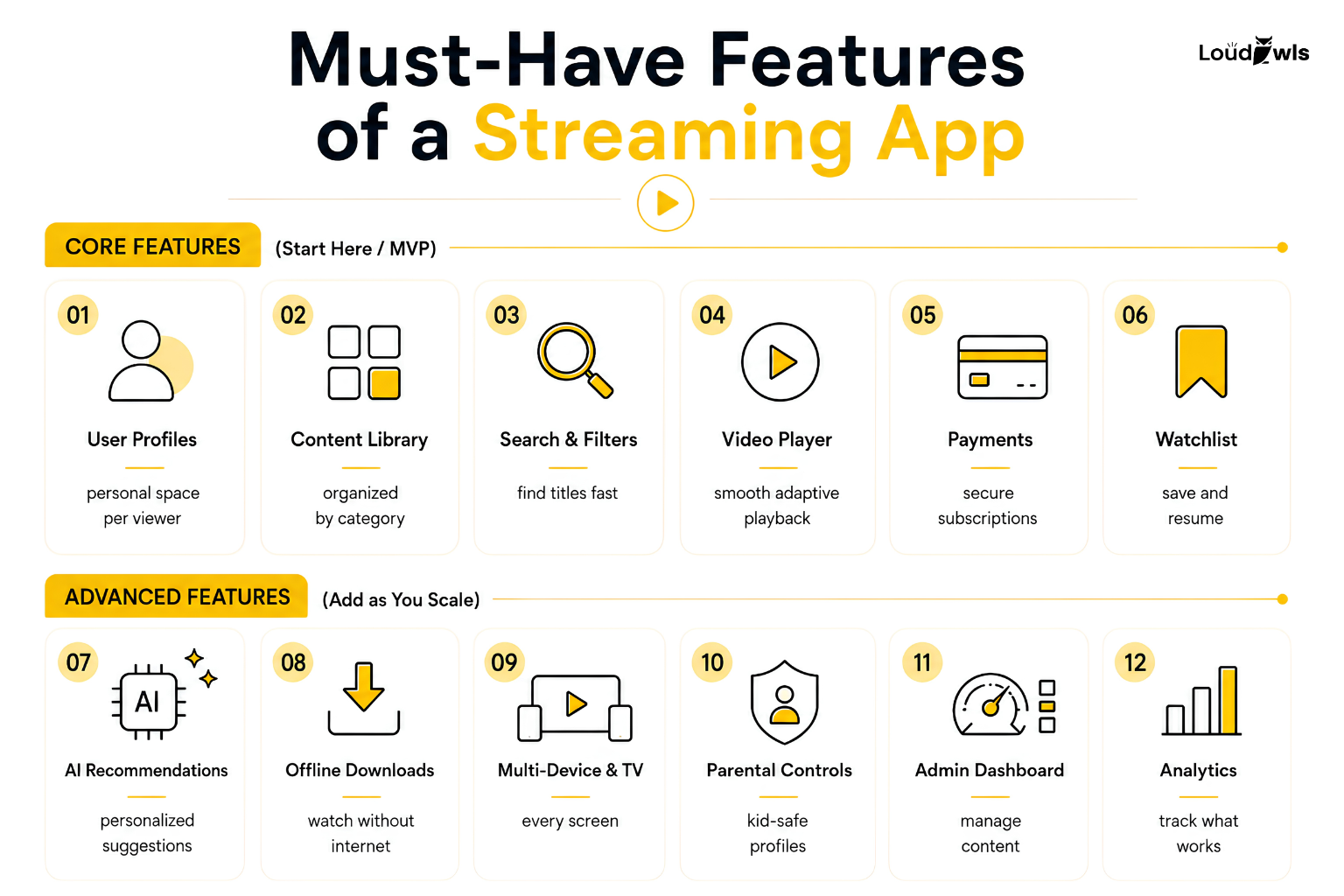
A streaming app doesn’t need dozens of features from day one. Start with the essentials that help users sign up, discover content, and enjoy smooth playback. Add advanced features as your audience grows.
Core Features — Your MVP
User Accounts and Profiles — Let users create accounts and separate profiles to enable personalised viewing and recommendations.
Content Library and Categories — Organise movies, shows, or other content by genre, topic, and collections so users can find something quickly.
Search and Filters — Help users find specific titles, genres, actors, or categories without endless scrolling.
Video Player — Provide smooth playback with adaptive streaming, play, pause, resume, subtitles, and quality controls.
Subscriptions and Payments — Offer simple subscription plans and secure payment options that make signing up easy.
Watchlist and Favourites — Let users save content for later and quickly return to titles they enjoy.
Advanced Features — Add as You Scale
AI Recommendations — Suggest relevant content based on viewing history and preferences, making it easier to discover what to watch next.
Offline Downloads — Allow users to download selected content and watch it without an internet connection.
Multi-Device and TV Apps — Let users continue watching across smartphones, tablets, web browsers, and connected TVs.
Parental Controls — Give parents control over what children can watch through dedicated profiles and content restrictions.
Admin Dashboard — Give your team one place to manage content, users, subscriptions, and platform activity.
Analytics — Track what users watch, where they stop watching, and which content performs best to improve the platform.
How Much Does It Cost to Build an App Like Netflix?
The cost depends on what you’re building. A lean MVP and a full-scale streaming platform can have very different budgets. You don’t need a Netflix-sized budget to launch — you need enough to validate your idea with real users.
MVP — Around $18,000 to $40,000: Includes essentials like user accounts, content library, search, video playback, and payments across one or two platforms. Ideal for testing demand and validating a niche.
Mid-Level Platform — Around $40,000 to $120,000: Adds features such as AI recommendations, offline downloads, multi-device support, an admin dashboard, and analytics for a growing audience.
Full-Scale Platform — $150,000+: Designed for larger audiences with advanced personalisation, connected-TV apps, live streaming, and scalable infrastructure.
What Actually Drives the Cost?
Features — Advanced functionality increases design, development, and testing time.
Platforms — Building for mobile, web, and TV requires additional development. Cross-platform technologies can help reduce costs.
Streaming Infrastructure — Storage, transcoding, CDN, and bandwidth are ongoing expenses that increase as your audience grows.
Content Volume — More videos require more storage, bandwidth, and content management.
Team and Location — Development rates vary by region and can significantly affect the overall budget.
The smart approach is to start with an MVP, launch, and use real user data to decide what to build next. This keeps initial costs under control while giving you a clearer path to scale.
Tech Stack for a Streaming App
The right streaming app tech stack helps keep your platform fast, stable, secure, and ready to scale. You don’t need to build everything from scratch — proven technologies and cloud services can handle much of the heavy lifting.
Frontend — What Users See: React Native or Flutter can power iOS and Android from one codebase, while React works well for web. For connected TVs, tvOS and Android TV can extend the experience to larger screens.
Backend — The Engine: Node.js, Django, or Laravel can manage accounts, subscriptions, content, and business logic. This layer connects what users see with the data and services running behind the scenes.
Video Streaming Infrastructure: Transcoding prepares videos in different qualities, packaging makes them ready for playback, CDNs deliver content quickly, and DRM helps protect it. Together, these components create a smoother viewing experience.
Database: PostgreSQL or MySQL can manage users, subscriptions, and other structured data, while MongoDB can be useful for flexible content information.
Cloud and Hosting: AWS, Google Cloud, or Azure provide the infrastructure needed to handle traffic, storage, and increasing video demand as your audience grows.
Analytics and Personalisation: Analytics tools show what users watch, where they stop, and what content performs best. Recommendation systems can then use this data to help viewers discover content they are more likely to enjoy.
The best stack isn’t necessarily the one with the most technologies. It’s the one that fits your streaming app development goals, audience, budget, and plans for future growth.
How to Make Money From an App Like Netflix
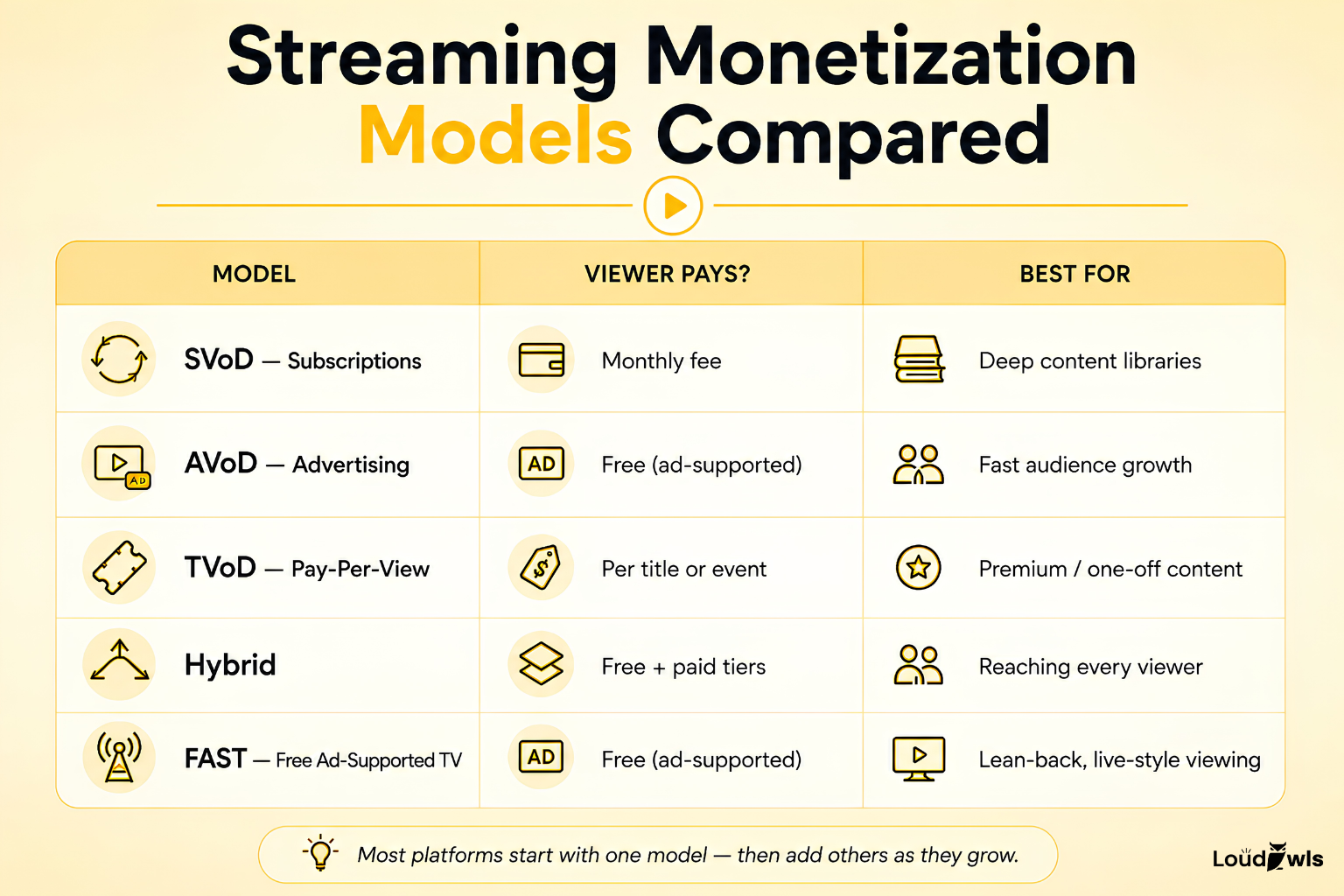
Subscriptions (SVoD): Users pay a recurring fee to access your content, similar to Netflix. This provides predictable revenue and works well when you have enough content to keep viewers subscribed.
Advertising (AVoD): Users watch content for free while you earn revenue from advertisements. It can help attract a larger audience, but you need consistent viewership for advertising revenue to become significant.
Pay-Per-View (TVoD): Users pay for individual movies, courses, events, or other premium content. This works well when viewers don’t want to commit to a monthly subscription.
Hybrid Model: Combine different approaches, such as a free ad-supported plan with a premium subscription. This gives users more flexibility while creating multiple revenue streams for your platform.
FAST (Free Ad-Supported Streaming TV): Offer free, scheduled channels supported by advertising. This gives viewers a traditional TV-style experience without requiring a subscription.
Which Model Fits Your App?
Think about how your audience wants to access your content. A niche platform may work better with subscriptions, while a broader audience could respond well to free, ad-supported viewing. You can also start with one model and introduce additional options as your user base grows.
The best streaming app business model is the one that balances what users are willing to pay with how your platform can generate sustainable revenue.
2026 Trends for Building an App Like Netflix
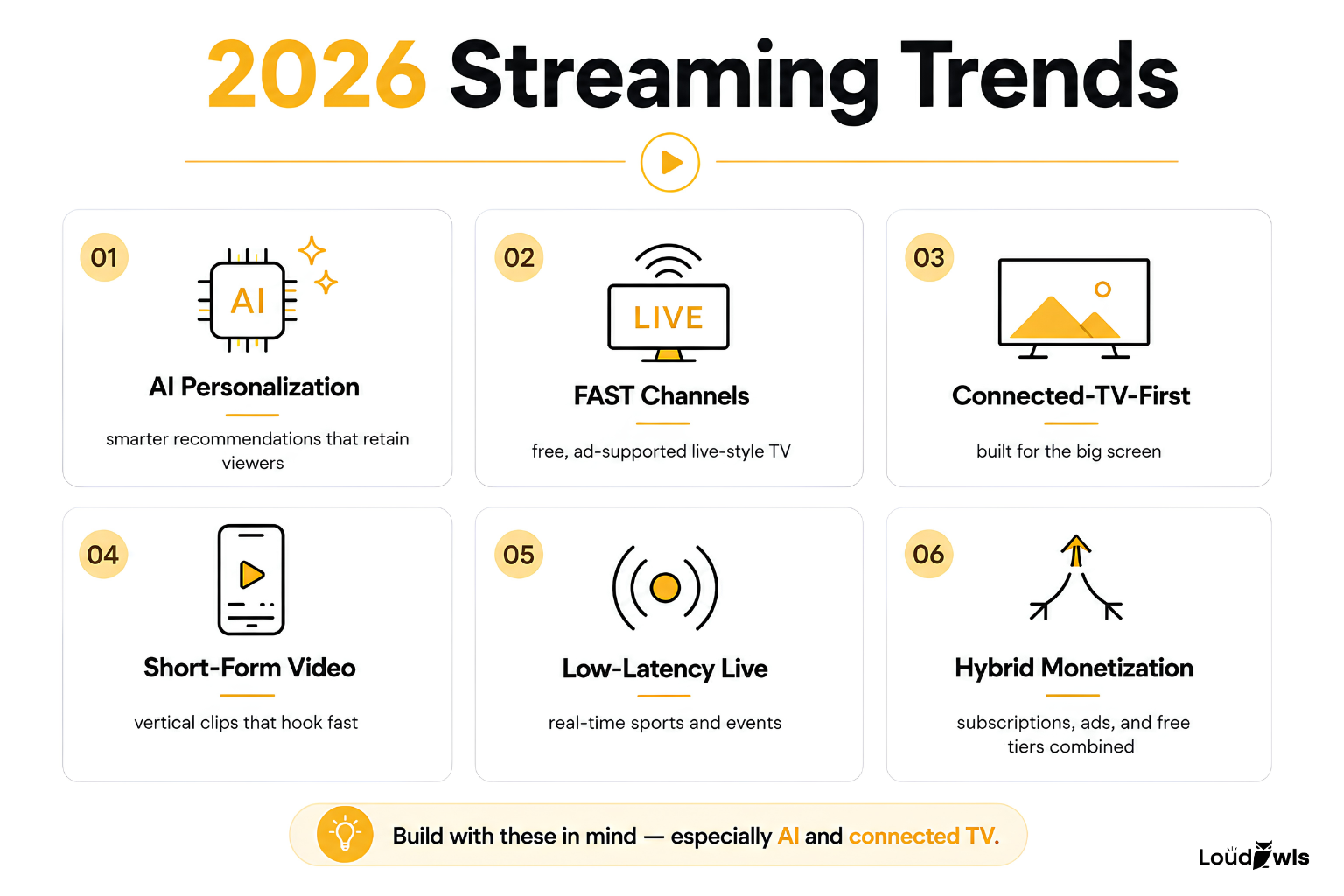
The streaming industry is evolving quickly, and user expectations are changing with it. If you’re planning streaming app development in 2026, understanding these trends can help you build a platform that feels relevant today and is ready for what comes next.
AI-Powered Personalisation: Viewers expect content recommendations that actually match their interests. AI can analyse viewing behaviour, preferences, and watch history to create more relevant recommendations and make content discovery easier.
FAST Channels: Free Ad-Supported Streaming TV is creating another way for viewers to watch content without a subscription. FAST channels offer a traditional TV-style experience while giving streaming platforms another advertising revenue opportunity.
Connected-TV-First Design: Streaming is no longer limited to smartphones. Users increasingly expect to watch across smart TVs and connected devices. Designing the experience for larger screens, remote controls, and easy navigation can make your platform more convenient for everyday viewing.
Short-Form and Vertical Video: Short-form content continues to influence viewing habits. Adding trailers, clips, previews, or dedicated short-video sections can help platforms capture attention and encourage users to explore longer content.
Low-Latency Live Streaming: Sports, concerts, news, and live events require fast delivery. Low-latency streaming reduces the delay between the real-world event and what viewers see, creating a more engaging live experience.
Hybrid Monetisation: Users want flexibility in how they access content. Combining subscriptions, advertising, and free tiers can help platforms reach different audience segments while creating multiple revenue streams.
What These Trends Mean for Your Streaming App
You don’t need to implement every trend from day one. Start with the features that matter most to your audience, then build toward technologies such as AI personalisation, connected TV, and flexible monetisation as your platform grows.
Planning for these trends early can also make your streaming platform easier to scale and reduce the need for major changes later.
Ready to Build Your Streaming App?
Building a streaming app in 2026 is more achievable than ever. You don’t need to replicate Netflix from day one — you need a clear niche, the right features, and a development team that can help you launch, learn, and scale.
At LoudOwls, we build streaming platforms from end to end — from cross-platform mobile apps and intuitive user experiences to scalable cloud backends and video streaming infrastructure. Start with an MVP, validate your idea with real users, and expand as your audience grows.
Frequently Asked Questions
How do you create an app like Netflix?
Start with a clear niche and build an MVP with essential features such as user accounts, content browsing, search, video playback, and payments. React Native or Flutter can handle the apps, while cloud infrastructure supports video streaming. Launch with the essentials and add features based on user feedback.
How much does it cost to build an app like Netflix from scratch?
The cost depends on the platform’s features, number of platforms, and streaming infrastructure:
MVP: Around $18,000–$40,000
Mid-level platform: $40,000–$120,000
Full-scale platform: $150,000+
How long does it take to build a streaming app like Netflix?
A basic MVP typically takes around 3–5 months. A more advanced platform with features such as AI recommendations, live streaming, connected-TV apps, and advanced personalisation can take longer.
What technology is used to build a streaming app?
Mobile Apps: React Native or Flutter
Backend: Node.js
Video Streaming: Cloud services such as AWS for transcoding, CDN, and DRM
Database: PostgreSQL for users, subscriptions, and other structured data
The ideal technology stack depends on your platform requirements, audience, and scalability plans.
What features are needed for a streaming app?
Start with essential features such as:
User profiles
Content library and categories
Search and filters
Video player with adaptive streaming
Subscriptions and payments
As the platform grows, you can add AI recommendations, offline downloads, multi-device support, parental controls, analytics, and an admin dashboard.
How do streaming apps make money?
Subscriptions (SVoD): Users pay a recurring fee.
Advertising (AVoD): Users watch content for free while the platform earns from ads.
Pay-Per-View (TVoD): Users pay for individual titles or events.
Hybrid: Combines subscriptions, advertising, or free access.
Many platforms start with one monetisation model and expand as their audience grows.
Is it legal to build an app like Netflix?
Yes. Building the technology is legal, but you need the appropriate rights or licenses for any movies, shows, music, or other third-party content you distribute. Original or properly licensed content can be used on your platform.
Can LoudOwls build my streaming app?
Yes. LoudOwls can help build your streaming platform from MVP to a scalable product, including cross-platform apps, cloud infrastructure, and streaming functionality. Get in touch to discuss your idea.