on-demand app development
On-Demand App Development in UAE: Features, Costs & Benefits
Quick Summary * This blog breaks down why the UAE's on-demand economy is a


"How much is this actually going to cost us?" It is usually the first question a founder asks in a discovery call, and rarely the last, because the honest answer depends on a dozen decisions that have not been made yet. Developer rates have shifted since the pandemic-era boom, client expectations have gone up, and the cost to develop an app now hinges on far more than whatever number gets quoted in a first phone call.
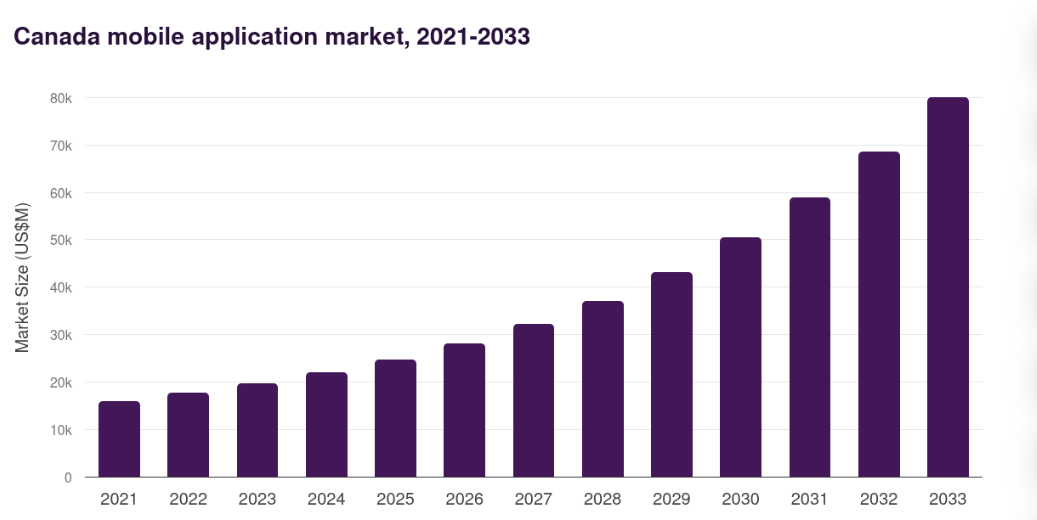
Here is what actually drives that number this year, what shapes your quote, how costs shift by platform and complexity, and where the expenses nobody mentions upfront tend to hide.
Most Canadian businesses land somewhere between CAD 40,000 and CAD 90,000 for a professionally built mobile app in 2026. That range is a starting point, not a promise, because the number moves a lot depending on scope, and treating any single figure as gospel is how budgets get blown by month three. A simple internal tool and a customer-facing app with live payments both count as "mobile apps," but they belong in completely different budget conversations.
The tiers below reflect what businesses are actually paying this year, sorted by scope rather than industry buzzwords.
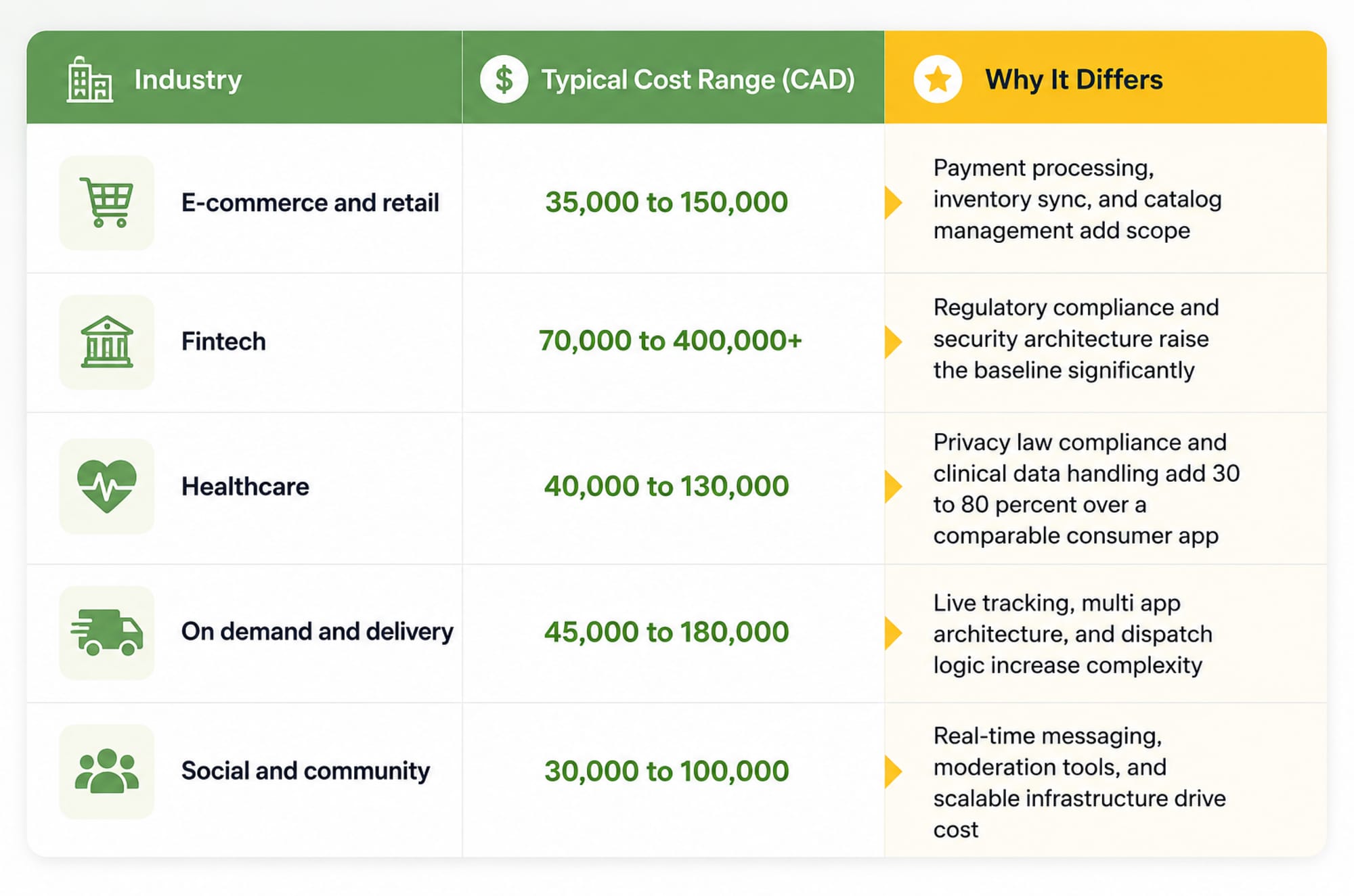
Industry matters more here than most founders expect going in. Regulatory rules, data handling requirements, and integration complexity vary a lot from one sector to the next, so two apps with nearly identical feature lists can land on very different invoices once compliance gets involved.

The cost to develop an app in Canada is almost never one variable doing all the work. It is scope, design ambition, and technical depth pulling in the same direction, and mobile app development stopped being a single line item a while ago. It now spans design, engineering, and years of support after launch. Two businesses can describe what sounds like the same app on a call and still walk away with quotes that differ by tens of thousands of dollars, simply because nobody scoped the underlying drivers properly.
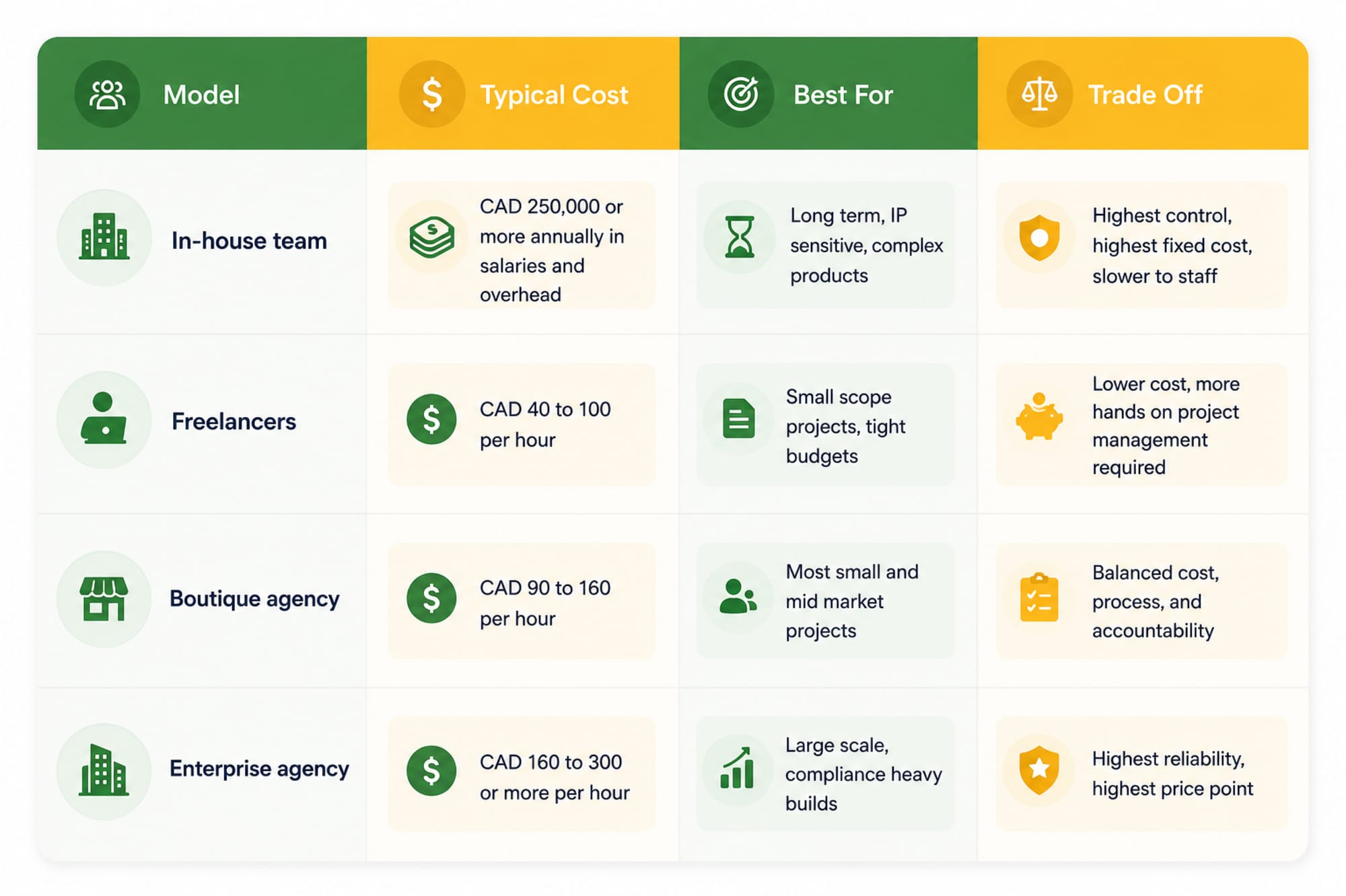
Team composition on its own can shift a quote substantially. A lean two-person setup and a full cross-functional team produce very different apps and very different invoices, even when the feature list on paper looks nearly identical.
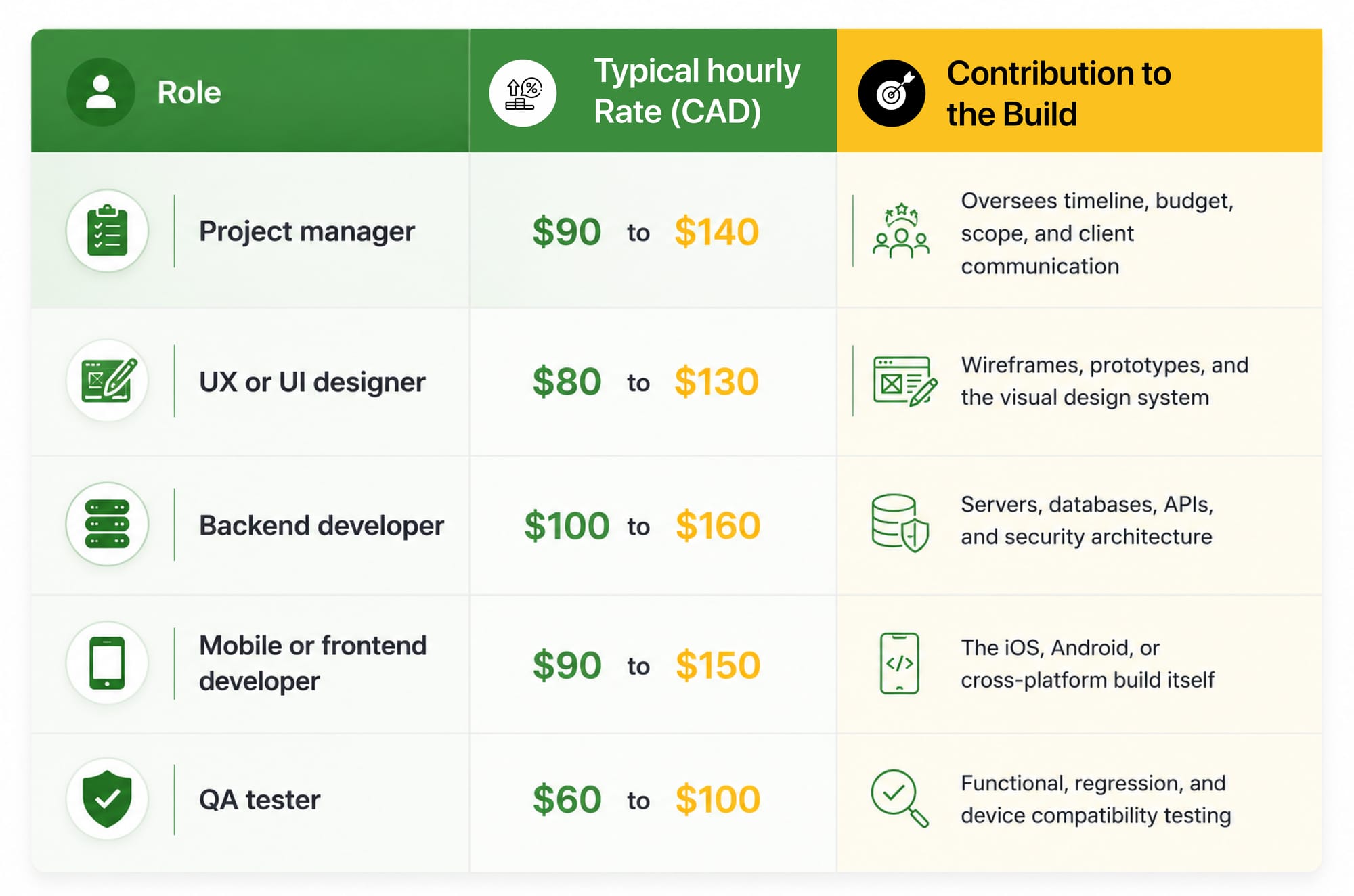
Where that team sits matters almost as much as who is on it. Toronto and Vancouver carry a premium simply because of how concentrated the tech talent is there, while other Canadian cities offer comparable quality at a noticeably lower rate.
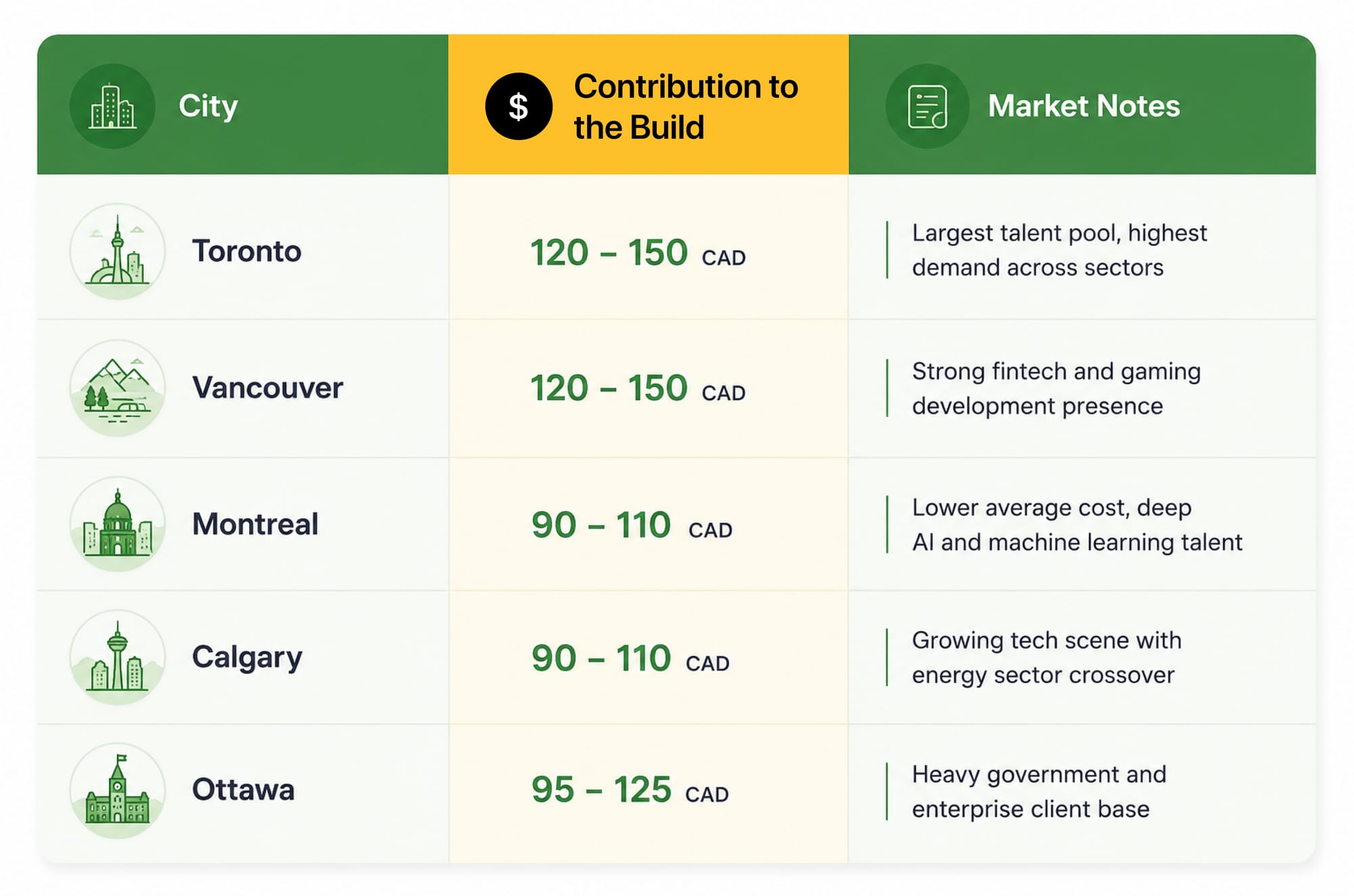

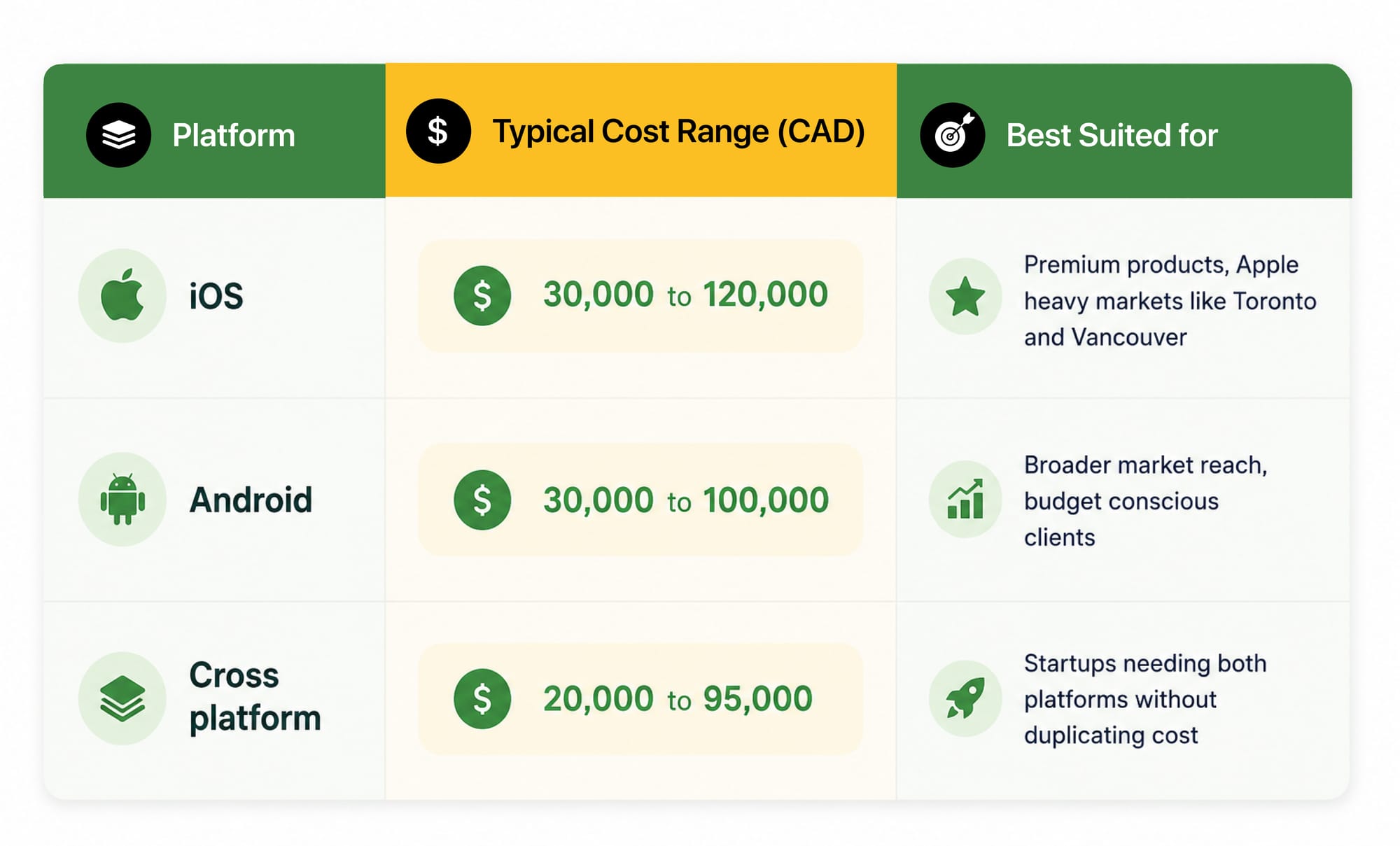
Platform choice has a bigger effect on mobile app development cost than most people assume going in. Building for a single platform is cheaper on paper, but the right call depends on where your actual customers are, not which option looks lighter on the invoice. A consumer app chasing a younger, Android-leaning crowd and a premium service aimed at Apple-heavy markets like Toronto or Vancouver need genuinely different playbooks, not the same template with a different logo.
Complexity moves the number just as much as the platform does. A simple loyalty app and a logistics platform with live tracking are not remotely the same project, even though both technically fall under mobile app development. The deeper the feature set goes, the more every phase of the build stretches, and that stretch compounds across design, engineering, and testing.

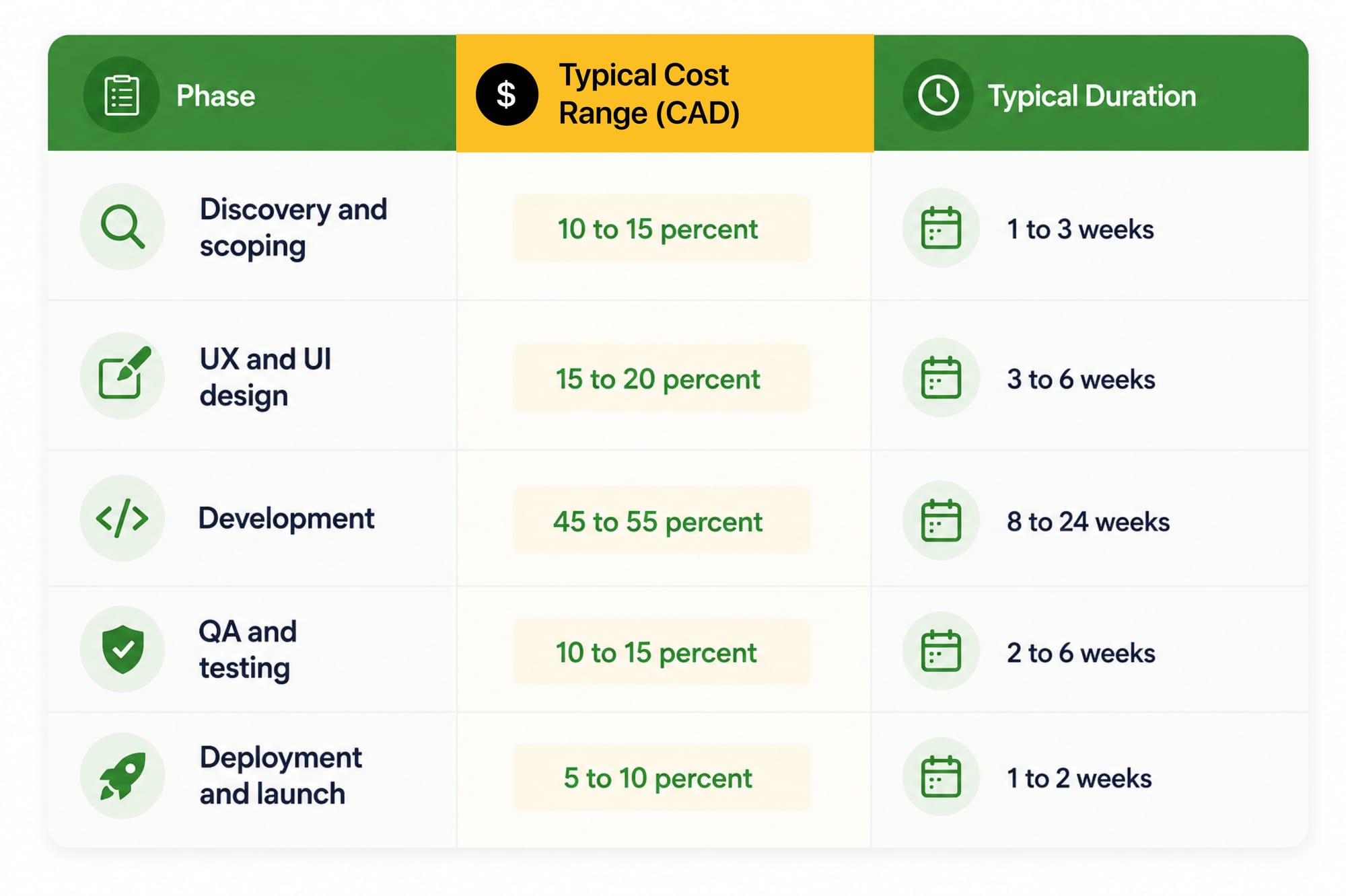
Knowing where the budget actually goes, phase by phase, makes it a lot easier to spot a quote that is missing something. Development eats the largest share by far, but the phases around it are what decide whether that development phase goes smoothly or turns into a mess.
The quoted app development cost is almost never the final number, and most Canadian founders learn this the hard way. A real chunk of any app budget gets eaten by expenses that only show up once the build is technically finished. Mobile app development does not stop at launch, no matter how the initial pitch made it sound, and the list below is proof of that.
How you staff the build also shapes what you are exposed to down the line, and this is where a lot of businesses either overbuild infrastructure they will not need for another year, or underbuild support their app cannot actually survive without.
Building a mobile app in Canada in 2026 is as much a strategic call as a financial one. The businesses that actually get a return rarely chase the cheapest quote in the room. They hired app developers who understood their market, priced the whole lifecycle instead of just the build, and stuck to a transparent app development process instead of settling for guesswork dressed up as a fixed price.
LoudOwls has spent years walking Canadian businesses through exactly this decision. As a best app development company working with founders and enterprises across Toronto, Vancouver, and beyond, we start every engagement with a real scope and an honest number, not a placeholder quote designed to win the deal and balloon later. If you want to build something that actually performs and want a partner who treats your budget with the same care as your product, we would be glad to talk it through.

1. What is the average app development cost in Canada in 2026?
Somewhere between CAD 40,000 and CAD 90,000 covers most professionally built apps this year. That said, the moment fintech or healthcare compliance enters the picture, that ceiling stops applying. Those builds routinely run well past CAD 100,000, and pretending otherwise just sets up a painful renegotiation later.
2. How much does it cost to develop an app for both iOS and Android?
Going native on both platforms at once will usually add 30 to 40 percent over a single cross-platform build, which itself tends to fall between CAD 28,000 and CAD 95,000. It sounds like an easy place to cut costs, and for an MVP, it often is, but once the app starts scaling, that native premium tends to pay for itself in performance.
3. Why should I hire app developers instead of using a no-code platform?
No code is genuinely fine if what you're building is simple, a basic form, a directory, a lightweight booking flow. The trouble starts once you outgrow it. Most teams find that out the hard way, six months in, when the platform can't handle the feature they actually need, and hiring app developers becomes the plan B nobody budgeted for.
4. How do I choose the best app development company in Canada?
Ask to see apps they've actually shipped, not screenshots, the real thing, live and working. Look for pricing that's spelled out rather than bundled into a mystery number, and pay attention to how clearly they communicate before you've signed anything. And if a quote comes in noticeably lower than everyone else's for the same scope, that's a question, not a win.
5. Does the cost to develop an app include design?
Don't assume it does. UX research, wireframing, and UI design can quietly account for 15 to 20 percent of the total budget, and whether that's baked into your quote or billed separately is exactly the kind of detail that should get nailed down before anyone signs.

Quick Summary * This blog breaks down why the UAE's on-demand economy is a
LoudOwls
QUICK SUMMARY: 1. This blog covers the ten leading dating apps operating in th
LoudOwls
Quick Summary * The global supply chain visibility software market in 2025 was
LoudOwls