How Blockchain in Real Estate Is Transforming Property Transactions in Dubai
Quick Summary
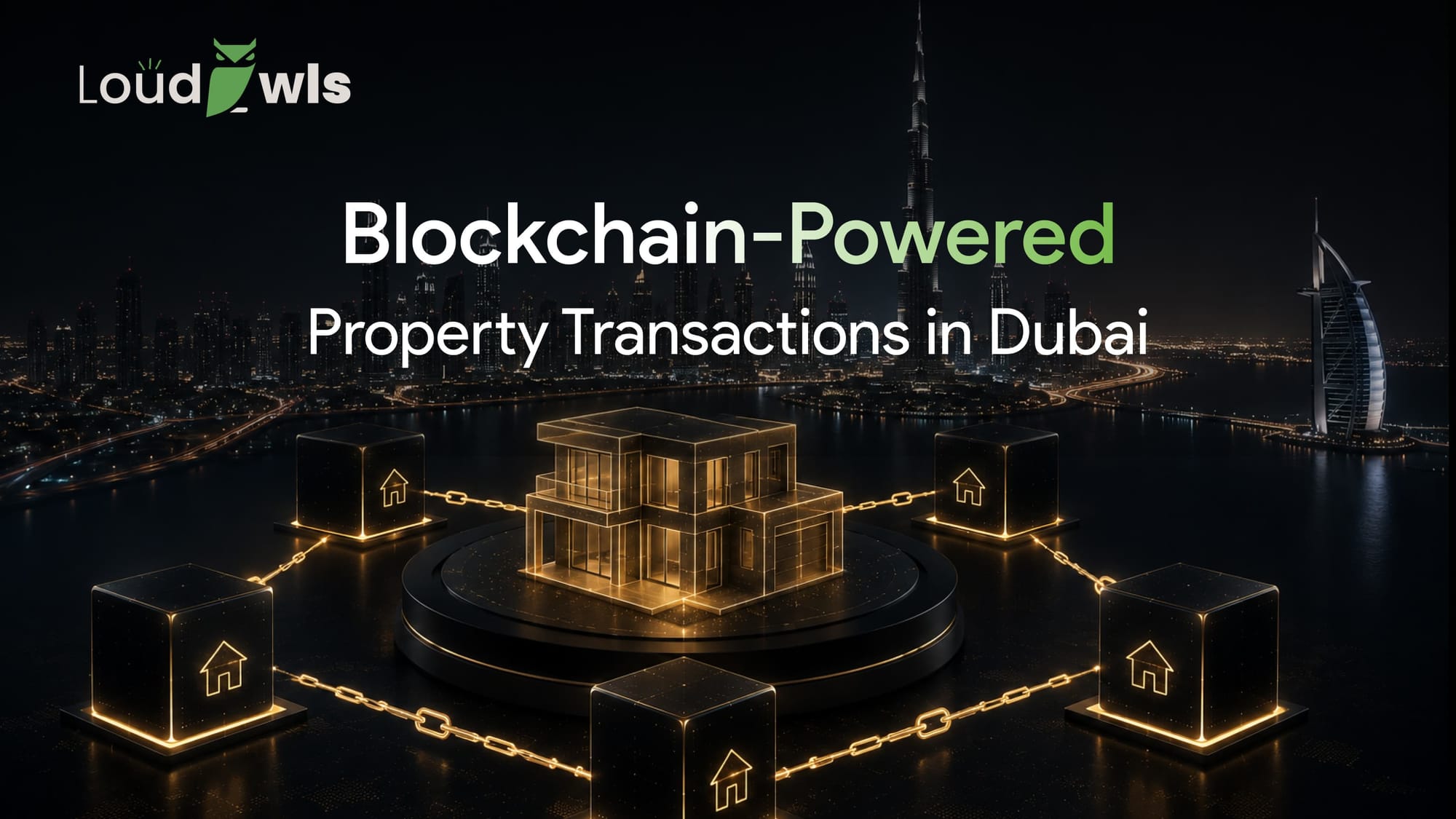
Blockchain in real estate is transforming Dubai's property market through secure digital transactions, real estate tokenization, and transparent ownership records.
From the Dubai Land Department's blockchain registry to DFSA-regulated investment platforms, the UAE is leading the global shift toward digital property ownership and investment.
This article explores how tokenized real estate works, the benefits for investors, the evolving regulatory landscape, and what the future holds for blockchain-powered property transactions.
Businesses looking to capitalize on this transformation can partner with LoudOwls to develop secure, scalable blockchain and PropTech solutions tailored to the UAE real estate market.
Introduction
Dubai has consistently been a leader in real estate innovation. What is different in 2026 is the depth of the change. It is not just the high-rise apartments or luxury real estate that are changing. Blockchain in real estate is revolutionising how properties are purchased, sold, owned and invested within the UAE.
The old ways of doing things, using paper, middlemen, and time-consuming processes, are being replaced by a system which is transparent, secure and automated. As international investors increasingly look to the UAE, real estate tokenization in Dubai is proving to be a valuable asset for the market.
The Scale of Dubai's Property Market
It is easier to understand the size of what is going on before knowing more about the mechanics. In 2024, real estate transactions in Dubai equaled AED 761 billion, and it is one of the most active property markets globally. Foreign investors were playing a larger role in those transactions, owing to incentives for residency, robust rental yields and tax-free status.
More than 226,000 transactions were handled by the DLD in 2024 alone. This has resulted in many bottlenecks when managing that volume through traditional paper-based processes. At this scale, digital infrastructure such as blockchain in real estate is no longer a luxury.
Why Dubai is at the Forefront
Dubai's forward-looking regulatory framework and strategic leadership have paved the way for blockchain in real estate. The Government's broader digital transformation programmes have accelerated PropTech adoption.
The city’s vision of becoming the first blockchain-powered city has encouraged real estate players such as developers, brokers and regulators to adopt blockchain technology more rapidly than in other markets.
Real Estate Tokenization in Dubai
When a property or real estate asset is tokenised, the asset is divided into multiple shares, each represented by a token held on the blockchain. These tokens can then be purchased by investors, giving them a fractional share of the property.
Real estate tokenization in Dubai allows investors to own a share of a valuable asset for a fraction of the cost, rather than purchasing an entire apartment or villa.
The practical result is that someone can own a meaningful share of a Dubai apartment for a few hundred dirhams rather than committing to a full purchase.
Benefits of Tokenized Real Estate
Tokenized real estate makes investing accessible to a broader range of investors.
It creates liquidity, with tokens being more easily traded than physical assets. Tokenized real estate stakes can be sold on secondary markets without waiting for a full property transaction to complete.
Fraud risk also drops. Blockchain in real estate provides transparency in property ownership, minimising fraud and litigation.
Platforms Operating in Dubai Right Now
PRYPCO Mint is one of the more visible platforms facilitating property tokenization in Dubai. It allows retail investors to buy fractional ownership stakes in pre-selected residential properties. The minimum entry point is significantly lower than buying physical property.
SmartCrowd is another regulated platform operating in Dubai that has facilitated investments for thousands of users across multiple residential communities. Stake is a third option with a similar model and is also regulated by the Dubai Financial Services Authority.
The Dubai Land Department and Its Blockchain Infrastructure
The DLD has not been a passive observer in this shift. It has continued to grow into one of the more developed digital property registries in the world since launching its real estate blockchain project in 2017. It also has a Real Estate Self Transaction (REST) system, which enables certain transactions to be completed without leaving the office.
The DLD's platform connects directly with banks, developers, and other government bodies. During the course of a transaction, everyone is updated instantly, and the documents can be checked simultaneously, not one after the other.
The DLD issues electronic title deeds that have the same legal effect as a paper deed, but are much more secure. An individual deed is signed with a cryptographic signature which is unique and cannot be replicated or changed. In a market where forged title documents have occasionally been an issue, this is a meaningful protection for buyers.
VARA, DFSA, and the Regulatory Environment
To make real estate tokenization more viable, the regulatory environment needs to follow suit. The Virtual Assets Regulatory Authority (VARA) was launched in 2022 to create a solid legal framework for digital assets, including tokenized real estate products, in Dubai.
VARA licenses platforms offering tokenized investment products, and mandates platforms to be capitalized, implement KYC verification for all investors, and maintain segregated accounts for clients. This offers some level of protection for investors that may be lacking in less-regulated markets.
The Dubai International Financial Centre also plays a role here. Its legal framework under English common law is familiar to international investors and accommodates financial innovation well. Property tokenization platforms can operate from the DIFC under DFSA oversight, giving them access to a globally recognised regulatory environment.
Regulatory Body
Jurisdiction
Role in Blockchain Real Estate
Dubai Land Department
Emirate of Dubai
Digital title deeds, blockchain property registry, REST system
VARA
Emirate of Dubai
Licensing tokenized asset platforms, digital asset oversight
Regulating crowdfunding and tokenization platforms
RERA
Emirate of Dubai
Real estate broker and developer licensing
What This Means for Foreign and Expat Investors
One persistent challenge for cross-border real estate tokenization in Dubai is the information gap. When an investor in the UK examines property in Dubai, they must rely on the authenticity of the available records and the integrity of the title. Blockchain in real estate removes the need for complete reliance on intermediaries.
Purchasing a property in Dubai remotely has become noticeably more accessible. With digital KYC, e-signatures, and blockchain-based title transfer, it is now possible to complete a property purchase in Dubai without setting foot in the UAE. Such transactions are already possible on several platforms in Europe, South Asia, and East Asia.
Foreigners can purchase freehold property in specific areas of Dubai, Abu Dhabi and other Emirates in the UAE. With blockchain, investors can easily obtain accurate information about a property's ownership and history, which would otherwise require costly legal due diligence.
How Blockchain is Transforming the Property Buying Process in the UAE
Blockchain not only speeds up the process of property buying, it also enhances it.
Faster Transactions
Blockchain in real estate speeds up transactions from weeks to days, or even hours. This is especially important in a competitive market environment.
Reduced Costs
Blockchain reduces the costs of transactions by removing middlemen. This eliminates the need for buyers and sellers to pay for the services of brokers, lawyers and other middle men.
Improved Security
Blockchain is secure due to its decentralised nature. The encryption of transactions and distribution across nodes makes them virtually tamper-proof.
New Platforms and Developments
New platforms are emerging in Dubai to facilitate property tokenization and broader blockchain adoption.
Online Exchanges for Property Tokens
These enable the search, investment and exchange of tokenized properties. It operates like a stock exchange for properties.
Integration with Cryptocurrency Ecosystems
There are platforms that connect to blockchain technologies to allow easy transactions with cryptocurrency. This presents new opportunities to international investors.
Secondary Markets for Liquidity
The lack of liquidity is a major issue in real estate. Secondary markets for blockchain-based real estate properties make it easy for investors to exit their investments, offering flexibility and quicker cash flow.
Challenges and Limitations
No technology adoption story is complete without acknowledging the friction. Blockchain in real estate in Dubai has made real progress, but challenges remain.
Regulatory Uncertainty
VARA and DFSA have built meaningful frameworks, but the rules are still being refined. Although there have been advances, they continue to develop. This may leave investors and platform providers with some doubt.
Technology Adoption
Blockchain adoption requires every party in a transaction- banks, developers and notaries to be operating on compatible systems. The stakeholders may not be receptive to blockchain. However, some players may not want to switch due to limited knowledge and skills.
Market Awareness
Many investors and developers are still not familiar with real estate tokenization. Platforms are investing significant resources in education and market awareness.
What the Road Ahead Looks Like
The Real Estate Sector Strategy 2033 aims to put Dubai's real estate sector on a trajectory towards achieving ambitious goals by the end of this decade. That's the framework that's built around digital transactions, the data-based monitoring, and overall global investment. Blockchain is not a side initiative within that strategy. It is foundational to how the DLD and UAE government expect the market to operate going forward.
Timeline
Expected Development
2025 to 2026
Broader DLD integration with banking systems; more regulated tokenization platforms launching
AI and IoT data feeding into blockchain property records; cross-border tokenized investment frameworks developing
2030 to 2033
Full implementation of Dubai Real Estate Sector Strategy 2033 digital goals
The Future of Blockchain in Dubai Real Estate
The prospects for blockchain in Dubai real estate are bright.
Integration with AI and IoT
Blockchain in real estate will combine with AI and IoT, leading to intelligent real estate ecosystems.
Expansion of Tokenization
With regulatory clarity, real estate tokenization of properties will increase, creating more investment options globally.
Global Leadership in PropTech
Dubai is emerging as a PropTech leader. Its pioneering use of real estate tokenization in Dubai provides a strategic advantage in attracting investment and technology providers.
Frequently Asked Questions (FAQs)
Are tokenization of property in Dubai open to foreigners?
Yes. International investors can invest on platforms regulated by DFSA/ VARA subject to a digital KYC process. To get started most platforms will not require a UAE residency visa or a local bank account.
Can foreigners invest in tokenized real estate in Dubai?
Under VARA or DFSA-licensed tokenized real estate platforms, a legal framework is in place. DLD blockchain in real estate title deeds is legally equivalent to traditional paper deeds.
What happens if a platform shuts down?
In accordance with DFSA and VARA rules, the platforms are required to have segregated assets for their clients and have procedures in place for winding up. However, investors must ensure they read through the platform terms carefully and consider this a real threat before investing.
How does rental income work with fractional ownership?
Rental income is distributed to token holders in proportion to their stake. Most platforms handle this automatically through smart contracts, crediting investor accounts on a monthly basis after deducting management fees.
Which platforms support real estate tokenization in Dubai?
PRYPCO Mint, SmartCrowd, and Stake are DFSA-regulated platforms currently operating in Dubai.
What are the main risks of real estate tokenization?
Regulatory changes, platform risk, and limited market liquidity are key risks investors should consider.
Conclusion
Blockchain does not solve all problems in real estate. It does solve specific and well-defined issues that plague property transactions, including fraud risk, settlement delays, and access barriers. Those results are already measurable and relevant to Dubai's market.
If you are already involved in the real estate industry in Dubai, understanding blockchain in real estate and real estate tokenization is essential for navigating future transactions efficiently.
Want to develop a safe blockchain solution for Dubai's real estate sector? LoudOwls assists companies in the UAE in developing scalable answers for digital property transactions, tokenization, and smart possession management.
With a decade of experience in global talent acquisition and HR leadership, Niti Aggarwal has helped build high-performing technology teams across India, Singapore, and LATAM. At LoudOwls, she focuses on people strategy, culture, and building teams that support long-term growth. Her expertise spans global recruitment, tech hiring, people operations, and culture-first leadership, with experience hiring 300+ engineers, tech leads, and managers across specialized technology domains.
With 12+ years of experience in technology and product development, Pardip B has led 250+ projects across 20+ countries, working across fintech, healthcare, eCommerce, SaaS, education, real estate, and AI. His notable work includes Motus, Klink, Talez, Compass, and Pyxis Social, along with solutions for global organizations such as IBM and PNC. He combines full-stack engineering, mobile development, UI/UX, and product strategy to create scalable, intuitive, and high-performing digital experiences.