AI app development cost
How Much Does It Cost to Build an AI App in 2026? A Complete Guide
Quick Summary * Building an AI app can cost anywhere from $15,000 to over $500

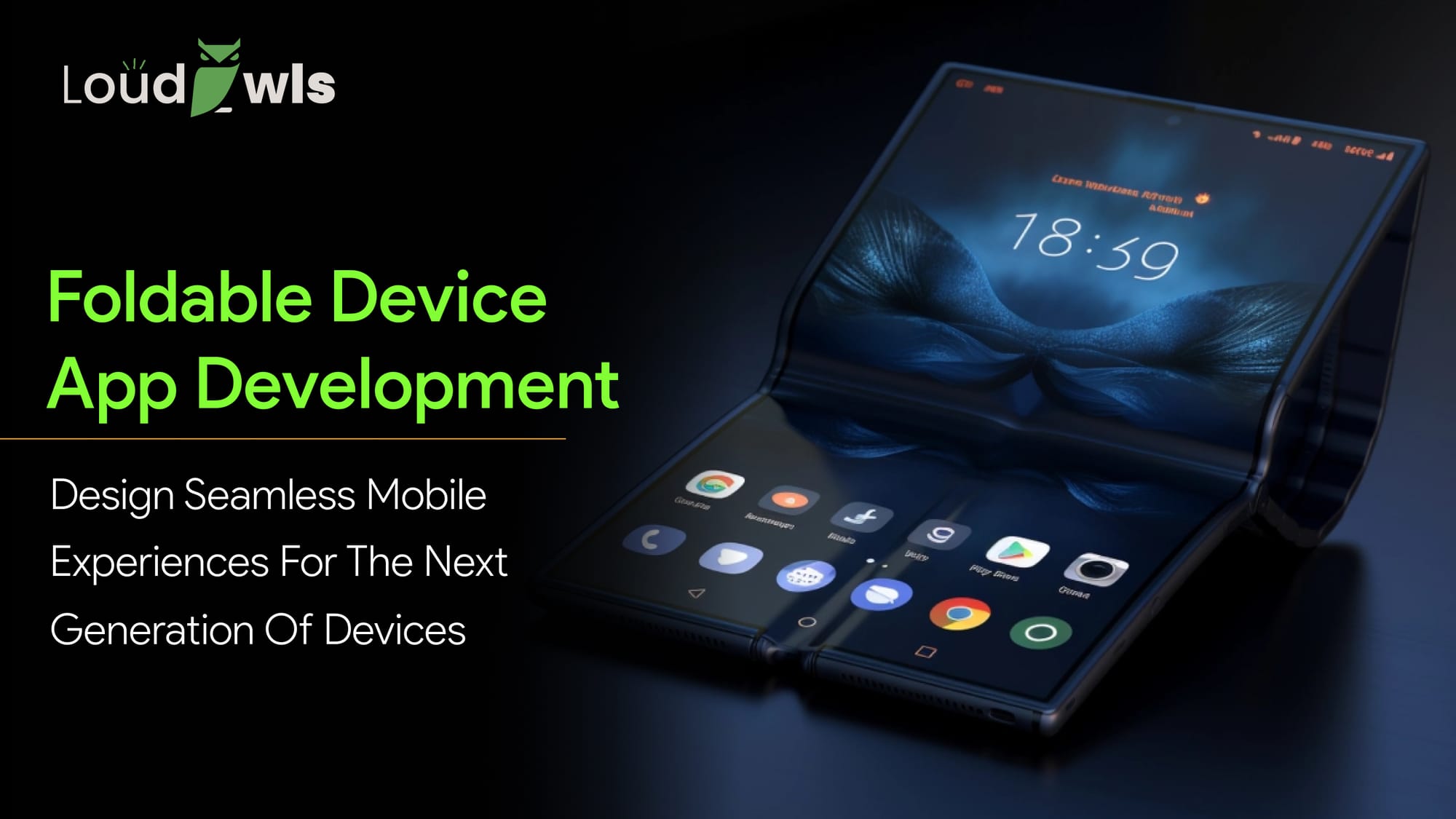

In recent years, technological advancements have introduced innovative devices that are transforming the way users interact with digital applications. One of the biggest innovations reshaping the industry is the rise of foldable devices.
These devices are redefining the future of Mobile App Development by offering flexible screens, adaptive interfaces, and immersive user experiences that traditional smartphones cannot provide.
According to industry reports, the foldable smartphone market is expected to surpass $100 billion globally by 2030, while leading manufacturers like Samsung, Huawei, Google, and Microsoft continue investing heavily in foldable technology.
As foldable devices become more mainstream in 2026, developers and businesses must adapt their applications to support evolving form factors and advanced user expectations.
This comprehensive guide explores the opportunities, challenges, best practices, and future of mobile app development trends for foldable devices.
Foldable devices, as the name suggests, are smartphones, tablets, or other gadgets with screens that can be folded or unfolded, allowing them to transform between different form factors. This innovation has been made possible by using flexible OLED (Organic Light-Emitting Diode) displays, which can be bent without compromising the visual quality. Some popular examples of foldable devices include the Samsung Galaxy Fold, Huawei Mate X, and Microsoft Surface Duo.
These devices come with different folding mechanisms, such as inward folding (like a book) or outward folding (like a brochure). Some devices offer a dual-screen setup where a hinge separates the screens. Understanding these various designs is crucial for creating apps that adapt seamlessly to different layouts.
Developing apps for foldable devices offers a range of exciting opportunities that can set your application apart from the competition:
Foldable devices often have large screens that can be divided into multiple sections, allowing users to run multiple apps side by side. This feature opens up new possibilities for multi-tasking and productivity apps.
Apps can seamlessly transition between screen sizes and orientations, providing a consistent experience as the device folds and unfolds. This flexibility enhances user engagement and satisfaction.
Foldable devices encourage out-of-the-box thinking in app design. You can create unique layouts, navigation patterns, and interactions that maximize screen space.
Gaming and multimedia apps can provide immersive experiences using the larger unfolded screen. This can include expansive gameplay, split-screen multiplayer, and more.
Foldable devices offer a larger canvas for productivity apps, making it easier for users to work on documents, edit images, or manage tasks.
While the opportunities are enticing, developing apps for foldable devices also comes with its own set of challenges:
Foldable devices come in various sizes and configurations. Developers must ensure their apps look and function well across different screen dimensions, aspect ratios, and folding mechanisms.
Creating a consistent and intuitive user interface (UI) and user experience (UX) across changing form factors can be complex. The app's layout, navigation, and interactions must adapt seamlessly.
Users expect a seamless experience when transitioning between folded and unfolded states. Ensuring that the app remains functional and visually appealing during these transitions is challenging.
With foldable devices being a relatively new category, the user base is smaller than traditional devices. This raises concerns about fragmentation and whether the investment in developing foldable devices is justified.
Larger screens and multi-tasking capabilities can strain performance and battery life. Developers must optimize their apps to maintain efficient operation.
To create successful apps for foldable devices, it's essential to follow best practices that address opportunities and challenges. Here's a step-by-step guide:
Before starting development, familiarize yourself with the foldable device's specifications, including screen sizes, aspect ratios, and folding mechanics. This understanding will guide your design decisions.
Create layouts that are adaptable to different screen sizes and orientations. To design adaptive interfaces, consider employing approaches such as Constraint Layout on Android or Auto Layout on iOS.
Take advantage of the multi-window capabilities of foldable devices. Your app should support running alongside other apps and adjust its content accordingly.
Ensure a smooth transition between folded and unfolded states. Save the app's state and UI configuration so users can pick up where they left off.
Design UI elements that can reposition, resize, or adapt to changes in screen size. Consider using percentage-based dimensions and scalable assets.
Testing is crucial. Verify your app's performance on various foldable devices to identify and fix any layout or functionality issues.
Optimize the performance of your app to avoid battery drain and slowness. Bottleneck can be identified using profiling tools.
Foldable devices are still relatively new, and users might not be familiar with their capabilities. Provide in-app tutorials or tooltips to guide users on taking advantage of your app on their foldable devices.
Technology evolves rapidly. Stay updated with the latest developments in foldable devices and app development techniques to ensure your apps remain relevant and competitive.
Developing mobile apps for foldable devices presents both challenges and exciting opportunities. As these devices become more mainstream, mastering the art of creating apps that leverage their unique capabilities will become a valuable skill for app developers. By understanding the technology, embracing best practices, and continuously adapting to the evolving landscape, you can position your app for success in foldable devices. Embrace the foldable revolution, and let your creativity unfold!
Ready to start your journey into the world of foldable app development? Connect with us at LoudOwls to learn how we can help you create stunning and functional apps for the foldable future.
FAQs
Foldable devices are smartphones or tablets with flexible displays that can fold and unfold into different screen configurations.
Foldable devices create opportunities for enhanced multitasking, immersive UI experiences, and advanced responsive app design.
Challenges include adaptive UI/UX, app continuity, performance optimization, device fragmentation, and varying screen configurations.
Flutter, React Native, Jetpack Compose, and SwiftUI are popular technologies for modern responsive app design.
Foldable devices allow dynamic layouts, multi-window experiences, larger workspaces, and immersive interactions.
Users expect seamless transitions between folded and unfolded states without losing app functionality or progress.
Current trends include AI-powered interfaces, adaptive layouts, AR/VR integration, and multi-screen productivity experiences.
LoudOwls provides scalable Mobile App Development solutions optimized for foldable devices, responsive app design, and future-ready user experiences.


Quick Summary * Building an AI app can cost anywhere from $15,000 to over $500
LoudOwls
Quick Summary * This blog explores the latest mobile app development trends re
LoudOwls
Key Takeaways ● A food delivery app like DoorDash typically costs $150,000
LoudOwls